
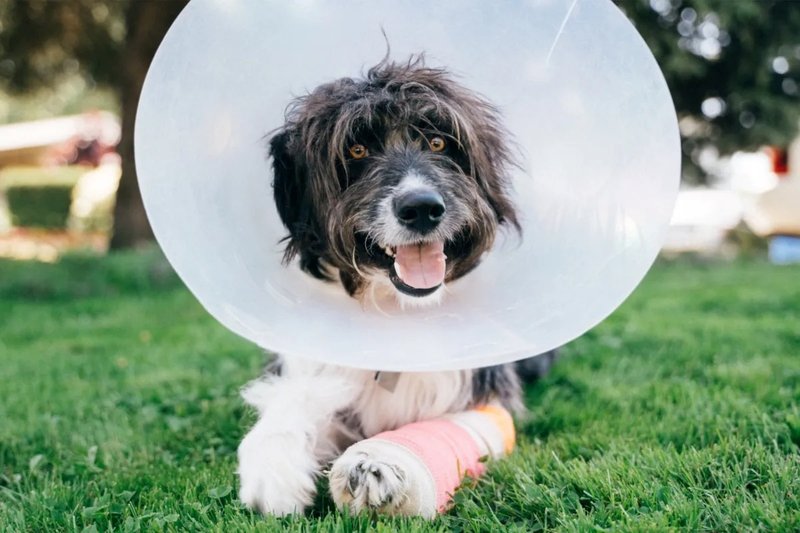
Tumor and Mass Removal
Surgical removal of benign or malignant growths to reduce discomfort, prevent complications, and support long-term health.
Ventral Bulla Osteotomy (feline)
A procedure used to access and remove infected tissue or tumors from the middle ear in cats.
Reconstructive Flap Surgery (axial or local flaps)
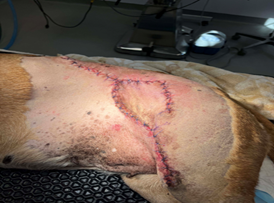
Used to close large wounds or after tumor removal, these specialized techniques promote proper healing and preserve skin function.
- Caudal Superficial Epigastric Flap: Transfers skin and underlying tissue from the abdominal area to cover large skin defects.
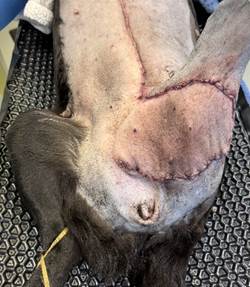
- Omotransversarius Flap: Relocates skin from the shoulder area to repair wounds or surgical sites on the neck or upper body.
- Flank Fold and Axillary Fold Flaps: Moves skin from the side of the body or underarm to help close wounds or surgical areas in nearby regions
.
Lymphadenectomy
Surgical removal of lymph nodes (mandibular, prescapular, axillary, inguinal, popliteal) for cancer staging or when lymph nodes are affected by disease.
Perineal Urethrostomy (feline)
Creates a new urinary opening to relieve life-threatening obstructions in male cats with recurrent urinary blockages.
Pinnectomy
Removes part or all of the ear pinna, typically performed to treat ear tumors or severe chronic disease.
Vulvoplasty
Corrects excess skin folds around the vulva that may cause infections or chronic irritation.
Mastectomy
Surgical removal of one or more mammary glands, often performed to treat or prevent the spread of mammary tumors.
Pyometra Ovariohysterectomy
Emergency removal of the uterus and ovaries in female pets suffering from a life-threatening uterine infection (pyometra).
Scrotal Ablation
Complete removal of the scrotum, often performed in conjunction with castration or for treating chronic scrotal issues.
Gastropexy
A preventative procedure that tacks the stomach to the abdominal wall to reduce the risk of gastric dilatation-volvulus (GDV or bloat) in dogs.
Surgical Intestinal or Liver Biopsy
Removal of tissue samples for diagnostic evaluation of chronic gastrointestinal or liver diseases.
Foreign Body Surgery
Removal of ingested or embedded foreign objects from the gastrointestinal tract, sometimes requiring resection and reconnection of the intestines.
Cystotomy
Surgical opening of the bladder to remove stones, tumors, or blockages, and to repair damage.
Splenectomy (non-emergent)
Removal of the spleen in cases of non-ruptured tumors, masses, or immune-related conditions.
Anal Sacculectomy
Surgical removal of the anal sacs in select cases of anal sac carcinoma or chronic disease.